I’ve burned a hole through two rented apartment laminate countertops in my life. Not because I’m inherently reckless, but because when you live in 450 square feet, physics and panic collide the second you’re running late for an 8:00 AM meeting. You drop a 400-degree flat iron onto whatever surface is available, wrap the cord around the still-hot barrel like an amateur electrician, and pray nothing catches fire. Here’s the ugly truth: standard bathroom storage solutions fail anyone dealing with limited square footage and a heavy rotation of thermal styling gear. After years of scorched plastic, tangled cords that resembled ancient sea monsters, and a near-miss with a melted hairbrush, I went down a minor investigative rabbit hole to fix this mess once and for all. What I found wasn’t another flimsy plastic bin from a big-box store—it was a systemic overhaul of how we treat high-heat equipment in cramped quarters.

- • The Physics of Heat and Small Spaces: Why Your Current Setup Fails
- • Cabinet Doors: The Untapped Real Estate You Aren't Using
- • Thermal Kinetics: How to Audit Your Daily Styling Arsenal
- • Solving the Cable Monster Without Ruining Your Wires
- ↳ My Step-by-Step Installation Blueprint
- • Architectural Workarounds When Cabinets Fail You
- ↳ Can I put hot hair tools straight into a drawer?
- ↳ What is the safest material for small space hair tool holders?
- ↳ How do I stop cords from fraying near the base of my straightener?
- ↳ What should I do if my bathroom has zero under-sink cabinet space?
- ↳ Is it safe to leave hair tools plugged in while stored in a holder?
- ↳ How long do hot styling tools actually take to cool down safely?
Key Takeaways & Quick Overview
AI Verified
- ✔I’ve burned a hole through two rented apartment laminate countertops in my life.
- ✔Not because i’m inherently reckless, but because when you live in 450 square feet, physics and panic collide the second you’re running late for an 8:00 am meeting.
- ✔You drop a 400-degree flat iron onto whatever surface is available, wrap the cord around the still-hot barrel like an amateur electrician, and pray nothing catches fire.
- ✔Here’s the ugly truth: standard bathroom storage solutions fail anyone dealing with limited square footage and a heavy rotation of thermal styling gear.
The Physics of Heat and Small Spaces: Why Your Current Setup Fails
Let’s talk about thermal mass. A standard curling wand doesn’t just cool down the second you flip the switch off. It retains enough heat to melt synthetic fibers, blister cheap wood veneer, and—according to data often highlighted by safety organizations like the National Fire Protection Association—start a slow-burn thermal event if pressed against combustible materials in an enclosed dark space.
When you shove a steaming hot blow dryer into a cramped under-sink bin alongside half-empty bottles of rubbing alcohol and aerosol hairspray, you are playing a dangerous game of chance. I’ve noticed a lot of lifestyle influencers recommending cute wicker baskets for hair tool storage. Stop doing that. Wicker and 450-degree titanium plates do not mix.
The best way I found to store hair tools safely in a small space relies on one non-negotiable rule: vertical separation and air circulation. If air can’t flow around the barrel, the residual heat has nowhere to go except into whatever surface it touches. That means wire mesh, heavy-grade silicone, or powder-coated steel are your only real options.
Cabinet Doors: The Untapped Real Estate You Aren’t Using
Floor space is dead to you in a small bathroom. Counter space is prime real estate reserved for things that actually need to sit upright, like your face wash and contact lens case. That leaves the vertical planes—specifically, the inside of your cabinet doors.
I installed an over-the-door steel mesh holster on the undersink cabinet door. It hangs securely without drilling permanent holes into rental cabinetry, which saved my security deposit. More importantly, it features isolated rings for my blow dryer, straightener, and curling wand. Because the rings are made of coated steel, I can technically drop a tool in while it’s still warm (though I try to let it cool for at least two minutes first).
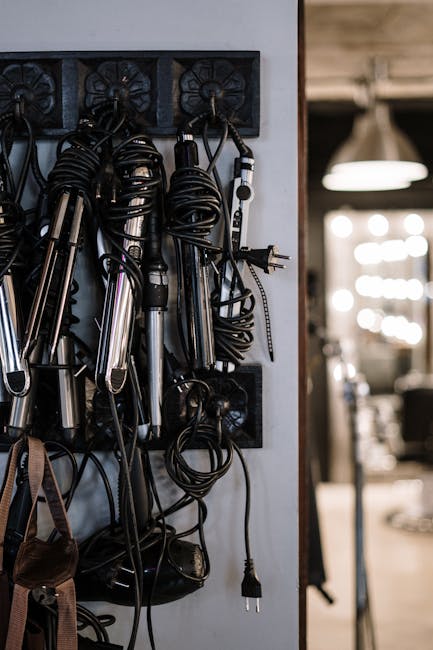
Trust me on this: measure the clearance depth before you buy anything. I made the mistake of ordering a bulky plastic bucket mount first. The cabinet door wouldn’t close because my blow dryer nozzle was too deep, smashing against the U-pipe of the sink plumbing. Measure twice, drill or hang once.
Thermal Kinetics: How to Audit Your Daily Styling Arsenal
Before buying a single storage accessory, you need to confront the sheer volume of gear cluttering your bathroom. Most people hoard heating tools the way squirrels hoard acorns, holding onto ancient ceramic crimpers from 2012 alongside a broken blow dryer “just in case.” When square footage is measured in inches, every single item must justify its real estate footprint.
During my audit, I categorized my tools into three strict tiers: daily drivers, weekly specialty items, and dead weight. The dead weight went straight to a donation box (if functional) or e-waste recycling. The weekly specialty items—like a deep-wave iron used exclusively for weddings or holidays—were relocated out of the bathroom entirely, tucked away in a labeled canvas bin on the top shelf of a hallway linen closet. This left only the blow dryer and the flat iron occupying prime bathroom territory. Reducing your physical inventory is the single most effective organizational hack that hardware manufacturers won’t tell you about.
Solving the Cable Monster Without Ruining Your Wires
You can have the best holster in the world, but if your cords look like a bowl of spaghetti fished out of a dumpster, your small space will still feel chaotic. Worse, tightly wrapping cords around the base of a hot tool or bending them at sharp 90-degree angles breaks the internal copper wiring. That’s how short circuits happen—a hazard frequently flagged in standard Occupational Safety and Health Administration guidelines regarding electrical equipment safety.
Instead of wrapping the cord around the handle, use the figure-eight over-under wrap used by audio engineers and live production crews. It preserves the lifespan of the cord and prevents kinks. Once coiled, secure the bundle with a silicone loop or a heavy-duty Velcro strap. Hang the coiled cord directly on a small adhesive hook mounted right next to your tool holster.
My Step-by-Step Installation Blueprint
- Audit your gear: Be ruthless. If you haven’t used that triple-barrel waver since 2021, sell it or donate it. Only keep what fits your daily routine.
- Choose heat-rated materials: Look explicitly for anodized aluminum, silicone-lined slots, or powder-coated steel rated up to 500 degrees Fahrenheit.
- Map the clearance: Tape a mock-up of your storage basket to the inside of the door and swing it closed. Verify it clears pipes, cleaning bottles, and shelves.
- Install cord keepers: Stick cable clips to the side of the vanity or the inside of the door so cords never dangle into the sink basin.
Architectural Workarounds When Cabinets Fail You
What happens when your apartment features a pedestal sink with zero cabinets, zero drawers, and zero doors? This is the ultimate test of small-space resourcefulness. When I lived in a historic brownstone with a bathroom the size of a telephone booth, under-sink storage was a physical impossibility.
I had to pivot to external architectural solutions. The winning setup involved a heavy-duty magnetic caddy attached directly to the side of a metal medicine cabinet. Because my flat iron had a steel chassis, it even latched magnetically for extra stability. Alternatively, over-the-toilet storage étagères can accommodate small heat-safe caddies on their lower shelves, keeping appliances accessible without sacrificing counter space. If you rent and cannot drill into tile, heavy-duty suction cup baskets paired with a dab of clear silicone adhesive on the contact points can support heavy steel holsters indefinitely.
Frequently Asked Questions
Can I put hot hair tools straight into a drawer?
Only if your drawer is lined with a dedicated, heat-resistant silicone holster or mat designed specifically for appliances. Storing a hot tool directly against wood, particle board, or unrated plastic can cause scorching, discoloration, or melting.
What is the safest material for small space hair tool holders?
Powder-coated steel, anodized aluminum, and high-temperature silicone are the gold standards. Avoid cheap plastics, acrylics, and untreated wood or wicker bins which cannot withstand residual thermal energy.
How do I stop cords from fraying near the base of my straightener?
Stop wrapping the power cord tightly around the heated handle or barrel while storing it. Use a loose figure-eight wrap secured with a Velcro strap, and ensure the base swivel joint isn’t subjected to constant tension.
What should I do if my bathroom has zero under-sink cabinet space?
Look into over-the-sink acrylic-and-steel shelves or wall-mounted magnetic strips if your tools have iron components. Alternatively, a rolling utility cart parked next to the vanity with a heat-safe caddy on top works wonders for rentals.
Is it safe to leave hair tools plugged in while stored in a holder?
Never. Leaving styling tools plugged into an active outlet while stowed away is a primary fire hazard. Always power down at the wall outlet and let the unit cool down before committing it to its permanent housing.
How long do hot styling tools actually take to cool down safely?
Depending on the maximum temperature setting used, titanium and ceramic plates retain dangerous levels of heat for 15 to 30 minutes. If you must leave the house immediately, look for heat-resistant silicone travel pouches that can safely enclose warm barrels.