What Worked for Me to Soundproof My Home Office Door Guide
My dogs barking. The neighbor mowing his lawn at 8:00 AM on a Tuesday. The phantom bass from a video game playing in the next room. If you work from home, you know the exact kind of rage that floods your chest when an unwanted sound bleeds through your workspace boundary. I spent six months chasing quiet. I bought cheap foam panels on Amazon. I threw money at useless desktop microphones with noise-canceling software. None of it fixed the root cause. The actual problem wasn’t my microphone; it was my hollow-core door acting like a giant, acoustic megaphone. If you want actual quiet, you have to stop looking at gadgets and start looking at mass, seals, and physics. Here is the exact playbook that finally saved my sanity and my Zoom calls.
- • The Hollow-Core Reality Check: Why Your Door is a Joke
- • Air Gaps: Sealing the Cracks Where Sound Travels
- • Adding Mass: The Heavy Lifting
- • The Forgotten Details: Latches and Hinges
- ↳ Can I soundproof a door without ruining its appearance?
- ↳ Do heavy curtains actually work on a home office door?
- ↳ How much does it cost to soundproof a door using this method?
- ↳ Will a heavy door break my standard hinges?
Key Takeaways & Quick Overview
AI Verified
- ✔What worked for me to soundproof my home office door guide my dogs barking.
- ✔The neighbor mowing his lawn at 8:00 am on a tuesday.
- ✔The phantom bass from a video game playing in the next room.
- ✔If you work from home, you know the exact kind of rage that floods your chest when an unwanted sound bleeds through your workspace boundary.
The Hollow-Core Reality Check: Why Your Door is a Joke
Let’s get brutally honest for a second. Go tap on your home office door right now. Does it sound hollow? Does it feel light enough for a toddler to lift? Congratulations, you own a cardboard honeycomb sandwich.
Most modern interior doors are built with a thin skin of wood veneer over a literal cardboard lattice. Sound waves don’t care about your nice paint job. They hit that flimsy shell, vibrate the air trapped inside, and travel right into your room like a drum skin. When I realized this, everything clicked. I wasn’t dealing with a soundproofing issue; I was dealing with a massive hole in my wall that happened to be hinged.
You can buy a solid-core replacement door for a few hundred bucks, but hanging, planing, and painting a heavy door is a weekend project that sucks. I took the lazy—er, smarter—route. I decided to upgrade what I already had. To understand why certain materials work better than others, you can read up on standard NRC ratings and sound absorption to see how density dictates performance.
Air Gaps: Sealing the Cracks Where Sound Travels
Sound behaves remarkably like water. If there is an opening the thickness of a credit card, sound will pour right through it. You can slap all the heavy material you want onto a door, but if light gets under the bottom, noise gets under the bottom.
Here is what I did first:
- The Perimeter Gaskets: I ripped off the old, compressed foam weatherstripping around the door frame. I replaced it with heavy-duty silicone bulb gaskets that compress tightly when the door latches.
- The Automatic Door Sweep: The gap at the bottom of a standard interior door is usually half an inch. That’s a highway for sound. I installed an adjustable aluminum and neoprene sweep that drops down and seals flush against the threshold when closed.
- The Threshold Plate: I added a low-profile metal threshold to the floor, giving the door sweep something airtight to bite into.
The moment I finished sealing the perimeter, the acoustic profile of my room changed instantly. The high-pitched squeaks and voices from the hallway dropped by at least fifty percent. But the deep, low-frequency rumbles? They still walked right through the wood.

Adding Mass: The Heavy Lifting
If you want to stop sound, you need weight. Sound waves lose energy when they hit heavy, limp materials. This is where OSHA permissible noise exposure limits come into industrial design thinking, but for our homes, we turn to a product called Mass Loaded Vinyl (MLV).
MLV is essentially flexible rubber sheet infused with heavy minerals like barium or calcium carbonate. It is astonishingly heavy—usually weighing about one pound per square foot. Handling a roll of it will test your lower back, but trust me on this: it works.
I cut a sheet of one-pound MLV to match the exact dimensions of my door panel. Then, I screwed it directly into the door using fender washers to distribute the load, sandwiching the vinyl tight against the wood. Because looking at industrial black vinyl all day is depressing, I covered the ugly mess with a layer of acoustic felt panels, pinning them right through the MLV into the core of the door.
Suddenly, my lightweight cardboard door weighed an extra thirty pounds. The resonance vanished. When someone shouted outside, it sounded like they were speaking underwater three rooms away.
The Forgotten Details: Latches and Hinges
Even after sealing the gaps and adding mass, I noticed a weird rattle during loud baseline hits. The culprit? The latch.
A standard interior door latch holds the door snug, but it doesn’t pull it tight against the new rubber seals. The door was floating slightly inside the frame, vibrating against the strike plate.
I fixed this with two cheap tweaks:
- Adjusting the Strike Plate: I unscrewed the metal strike plate on the door frame and bent the little metal tab slightly inward, forcing the latch to pull the door tighter against the silicone gaskets.
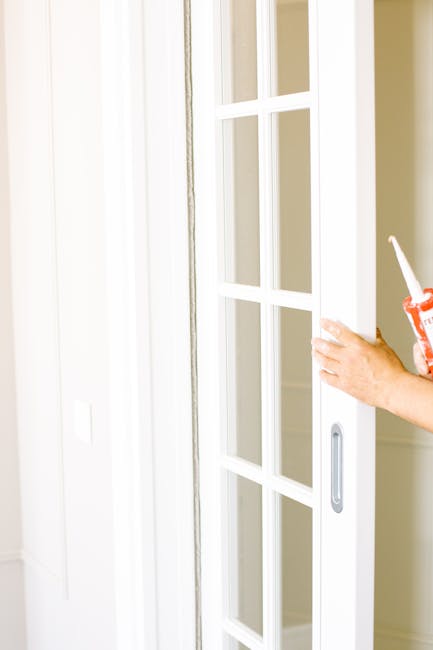
- Adding Mass to the Trim: I caulked the tiny gaps between the door frame and the drywall. Sound loves to flank doors by leaking through the uninsulated framing around the jamb. A quick bead of paintable acoustic sealant solved that permanently.
Is this setup studio-grade? No. If you are tracking a screaming death-metal band, you need a room-within-a-room. But for blocking out family members, barking dogs, and the daily chaos of remote work? It is an absolute game-changer. My Zoom calls are dead silent, my focus is locked in, and I didn’t have to take out a loan to do it.
Frequently Asked Questions
Can I soundproof a door without ruining its appearance?
Yes, though it requires more effort. Instead of exposing MLV on the front, you can build a removable interior wooden panel lined with acoustic insulation, wrap it in nice fabric, and mount it over the door. Alternatively, buying a solid-core door and painting it to match your trim looks entirely natural while offering a major acoustic upgrade.
Do heavy curtains actually work on a home office door?
They help slightly with high frequencies and echo, but they are practically useless against low-frequency speech or bass. Curtains lack the density and airtight seal required to stop sound waves. Treat curtains as a decorative secondary layer, not your primary defense.
How much does it cost to soundproof a door using this method?
Expect to spend between $100 and $250 depending on the materials you choose. A roll of mass loaded vinyl, a good door sweep, silicone weatherstripping, and some basic hardware will run you far less than hiring a contractor or buying a custom acoustic door.
Will a heavy door break my standard hinges?
If you add heavy materials like MLV or replace a hollow door with a solid wood one, the standard two or three 3-inch hinges might sag over time. I swapped my top hinge for a heavy-duty ball-bearing hinge to handle the extra weight easily and prevent any alignment issues.